We offer a 100% satisfaction guarantee.
 Call us:
 Message us:

Draft for review, do not publish
If you are searching for window tinting Columbus Ohio, you are probably considering more than appearance. The right window film can make your vehicle more comfortable in summer, reduce glare, help protect the interior from sunlight, and add privacy.
However, tint is not simply a matter of choosing the darkest shade available. Ohio has specific requirements for light transmission and reflectivity, and the best film for your vehicle depends on your priorities, budget, and daily driving habits.
This guide explains Ohio’s tint rules, the main film options, what installation involves, how long tint takes to cure, and how to protect it afterward.
Why Window Tint Matters in Ohio
Central Ohio drivers experience bright summer sun, changing weather, and long commutes on highways such as I-270, US-23, and I-70. Window tint can improve the driving experience in several ways.
Heat rejection
Window film can reduce the amount of solar energy entering the cabin. That can help the interior feel more comfortable when your vehicle sits outside at home, work, or a shopping center.
The darkness of the film does not tell the entire story. A lighter ceramic film may reject more heat than a darker entry-level dyed film, depending on the product’s construction and specifications.
UV protection
Quality automotive films are designed to help reduce ultraviolet exposure through the glass. This can support protection for dashboards, seats, door panels, and other interior surfaces that may fade or deteriorate over time.
Window tint is not a replacement for regular interior care. For additional ways to protect your cabin, see these vehicle interior cleaning tips from D4 Auto Spa.
Glare reduction
Tint can reduce harsh glare from direct sunlight, especially during early-morning and late-afternoon driving. Reduced glare may make the cabin feel more comfortable, but drivers should always prioritize clear visibility over appearance.
Privacy and interior protection
A darker rear setup can make it more difficult for people outside the vehicle to see personal items inside. It can also help the cabin feel more private for families, professionals, and anyone who regularly carries equipment.

Ohio Window Tint Laws: The Important Numbers
Ohio’s requirements are based on light transmittance, commonly called VLT, or visible light transmission. VLT measures how much visible light passes through the vehicle’s glass and film together.
A higher VLT percentage means a lighter window. A lower percentage means a darker window.
According to Ohio Administrative Code Rule 4501-41-03:
- Windshield: Applied sunscreening material must allow at least 70% light transmittance, plus or minus 3%, and it cannot be red or yellow.
- Front side windows: The windows immediately to the left and right of the driver must allow at least 50% light transmittance, plus or minus 3%, and cannot be red or yellow.
- Rear side windows: The rule does not establish a minimum VLT requirement for windows not otherwise listed.
- Rear window: There is no minimum VLT requirement, but if the rear window is below the 50% threshold, the vehicle must have outside left and right rear-view mirrors.
- Reflectivity: Reflectorized materials are not allowed on the front windshield, front side windows, sidewings, or rear window.
- Windshield top strip: Material along the top of the windshield may not extend below the AS-1 line or five inches from the top, whichever is closer to the top.
These requirements apply to the glass and film together. A film labeled “50%” does not automatically mean the finished window will measure exactly 50% after installation.
This is general customer education, not legal advice. Ohio rules and enforcement can change, and factory glass may already have some tint. Before installation, check with your tint professional and, when necessary, local authorities to confirm that your planned combination is compliant.
Choosing Between Dyed, Metalized, and Ceramic Film
Dyed film
Dyed film is typically an entry-level option. It can provide shade, privacy, and some glare reduction at a lower price than higher-performance materials.
The tradeoff is that performance and long-term color stability may vary. If your main goal is maximum heat rejection, dyed film may not provide the same results as ceramic film.
Metalized film
Metalized film uses metallic particles to reflect or reduce solar energy. Depending on the product, it may offer strong glare and heat performance.
The important Ohio consideration is reflectivity. The state rule prohibits reflectorized materials on the front windshield, front side windows, sidewings, and rear window. Not every metallic film has the same appearance or level of reflectivity, so ask the installer to confirm that the specific film is suitable for your vehicle and intended locations.
Ceramic film
Ceramic film is a popular premium option for drivers who want heat rejection and comfort without choosing an extremely dark shade. It is also generally selected when preserving visibility and minimizing potential signal-interference concerns are priorities.
Ceramic film usually costs more than dyed film, but the upgrade may make sense for vehicles that sit outside frequently, commute long distances, or carry children and passengers during hot Ohio summers.
The best choice is not necessarily the darkest choice. A professional installer can help compare legal VLT levels and film performance for your vehicle.
What Window Tinting Costs
Window tint pricing depends on several factors, including:
- Vehicle size and window count
- Film category and performance level
- Existing film removal
- Rear-window shape and installation difficulty
- Whether you are tinting selected windows or completing a larger package
- Whether windshield or top-strip work is included
D4 Auto Spa does not publish a one-size-fits-all tint price in the information provided for this article, so we will not make up a number. The best way to receive an accurate quote is to provide your vehicle year, make, model, current tint condition, and the windows you want treated.
Remember that the lowest initial price may not deliver the lowest long-term cost. Film that fades, peels, bubbles, or performs poorly can require removal and replacement. Ask what type of film is being installed, what VLT is recommended, and whether the finished glass will be checked for compliance.
What to Expect During the Installation
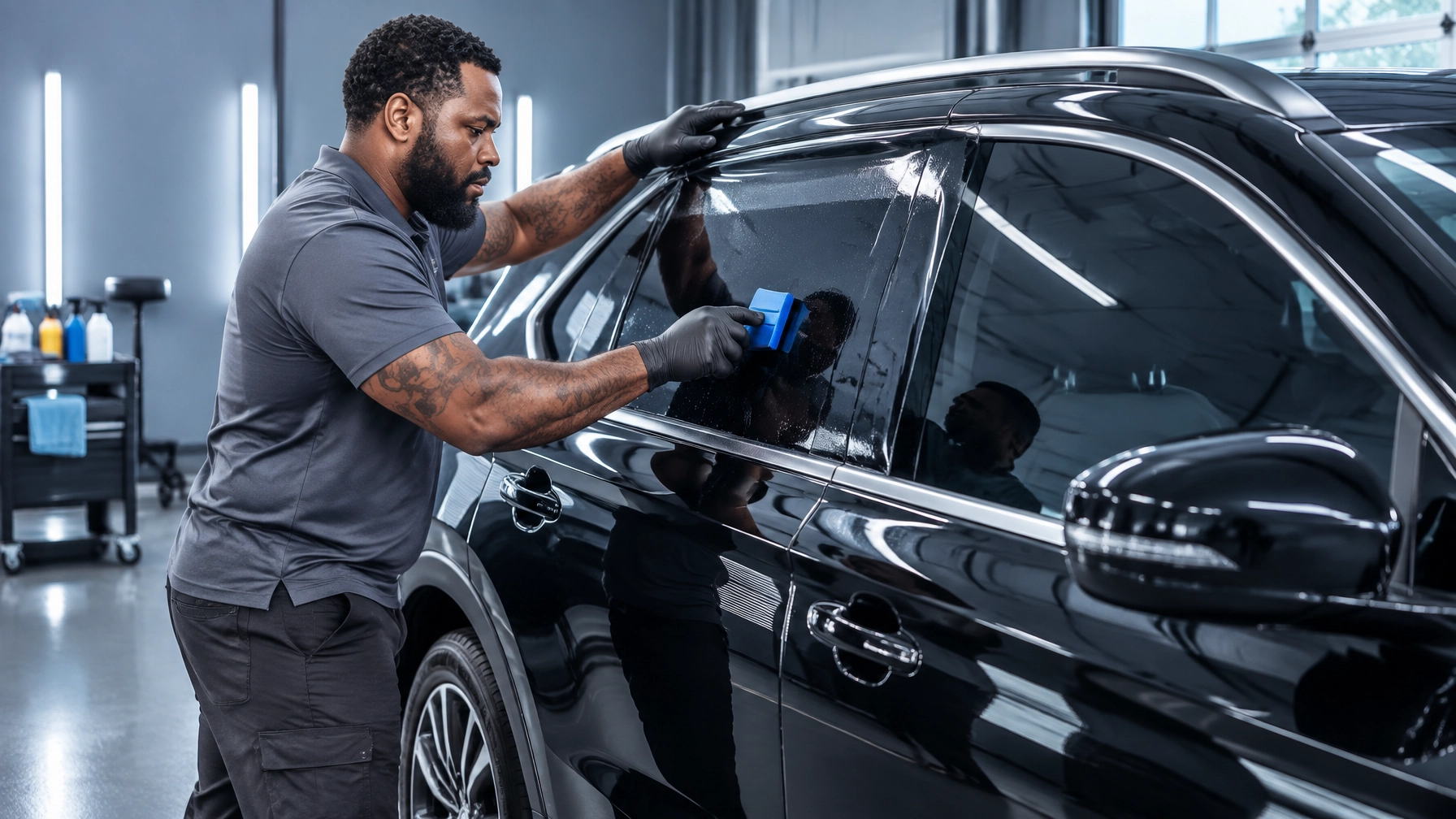
A professional tint installation generally follows a careful sequence:
- Vehicle inspection: The technician reviews the glass, existing tint, window seals, and any damage.
- Glass preparation: The windows are cleaned thoroughly to remove dust, oils, and debris.
- Film patterning: Film is cut and shaped for the specific window.
- Application: The film is placed with an installation solution and positioned carefully.
- Squeegee work: Moisture and air are worked out from beneath the film.
- Edge inspection: The technician checks the borders, corners, seals, and overall appearance.
- Final instructions: You receive guidance on window operation, cleaning, and curing.

Because D4 Mobile Auto Spa & Detailing is a mobile service, we come to your home or workplace when the location is suitable for the service. That can be especially convenient for busy professionals, families, fleet managers, and businesses that cannot spend hours waiting at a shop.
Cure Time and Fresh-Tint Care
Fresh film contains installation moisture that needs time to evaporate. Many professional tint installers recommend keeping the windows closed for approximately 24 to 72 hours, depending on the film, weather, and installation conditions. Some installers may recommend longer in cool or humid conditions.
During the initial curing period:
- Do not roll the windows down.
- Avoid touching or pressing the film.
- Do not wipe the inside of the glass.
- Do not panic over minor haze or small moisture pockets immediately after installation.
As the film cures, the appearance should become clearer and more uniform. If you notice a significant wrinkle, lifting edge, or persistent bubble after the recommended cure period, contact the installer before attempting a repair.
After curing, clean tinted windows with a mild, tint-safe glass cleaner and a soft microfiber towel. Avoid abrasive pads, ammonia-heavy products, and razor blades on the inside glass. Use gentle, straight passes rather than aggressive scrubbing.

Why Choose D4 Auto Spa for Window Tinting in Columbus?
D4 Mobile Auto Spa & Detailing was established in 2018 to provide convenient, high-quality vehicle care at customers’ homes and workplaces. Our trained professionals use high-quality products and techniques, eco-safe products, and a process supported by a 100% satisfaction guarantee.
Our services include window tinting, vehicle wraps, fleet and commercial detailing, Detailing Packages, A La Carte Services, Individual Services, and VIP Services. We also hold an authorized license from Detail King.
We serve customers in Columbus, Mansfield, Akron, Canton, Cleveland, Dayton, Ohio, and surrounding communities within a 35-mile radius. In the Columbus area, that includes drivers in Pickerington, Reynoldsburg, Dublin, Grove City, Westerville, Hilliard, Gahanna, Worthington, and nearby communities.
Schedule Window Tinting in Columbus, Ohio
Whether you want better summer comfort, reduced glare, improved privacy, or additional interior protection, the right window film starts with a compliant installation and realistic expectations.
Book a tint or detailing appointment online, or contact D4 Auto Spa directly:
- Phone: (614) 270-0908
- Email: Info.d4autospa@gmail.com
- Hours: Monday–Saturday, 9 a.m.–7 p.m.; Sunday by appointment
- Head office: Columbus, Ohio
- Website: www.d4autospa.com
Get a professional recommendation for your vehicle, desired shade, and driving needs before choosing your film.