We offer a 100% satisfaction guarantee.
 Call us:
 Message us:


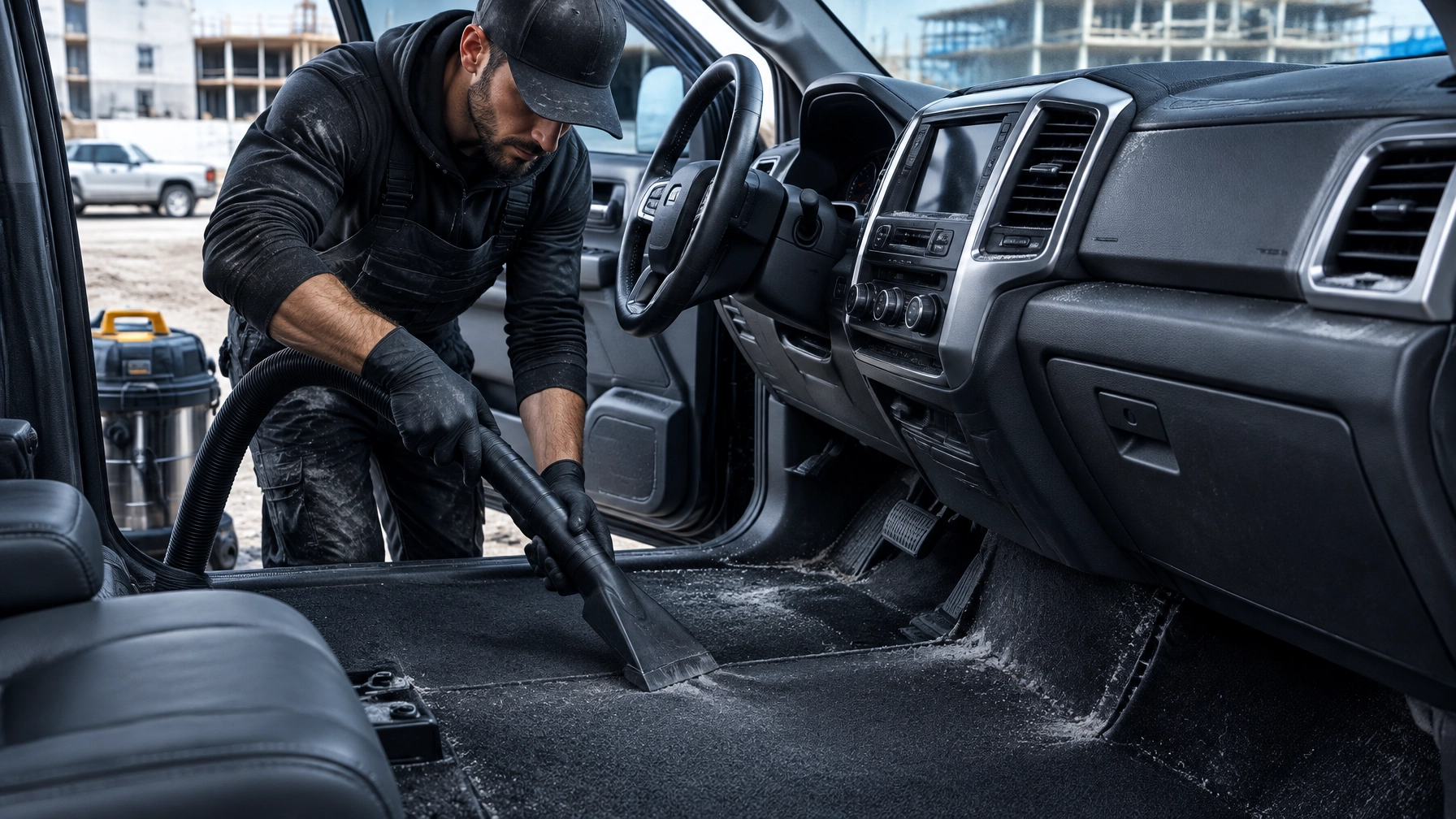
A construction truck interior can collect months of dust, mud, sawdust, and job-site residue in a surprisingly short time. Every trip brings more debris through the doors. Work boots grind it into the carpet, seats, floor mats, and door panels. Fine particles settle into vents, seams, cup holders, and seat tracks where a quick vacuum cannot reach.
If you are searching for how to remove construction dirt from a truck interior, the right approach starts with understanding the material you are dealing with. Construction dirt is not ordinary household dust. It requires careful dry removal, targeted cleaning, and a plan for keeping the cab cleaner between jobs.
Why Construction Dirt Is Harder to Remove
Construction work trucks often carry several types of debris at once, including:
- Fine silica and drywall dust
- Concrete and mortar residue
- Dried mud and clay
- Sawdust and wood particles
- Tar, caulk, and adhesive overspray
- Dirt tracked in through work boots
- Food, drinks, and job-site odors
Fine drywall and concrete dust can settle deep into HVAC vents, fabric fibers, seat seams, and dashboard gaps. OSHA and NIOSH recommend controlling potentially silica-containing dust with methods such as HEPA vacuuming and wet cleaning instead of uncontrolled dry sweeping or blowing. You can review the OSHA silica housekeeping guidance and NIOSH information on drywall dust exposure for additional safety information.
Mud creates another problem. Once it dries, it hardens inside carpet fibers and mat grooves. Daily boot traffic then presses the material deeper into the flooring. Sawdust may look easy to remove, but fine particles can collect under seats and around rails. Tar and adhesive overspray may bond to plastic, vinyl, and glass if they remain on the surface too long.
Why a Household Vacuum Often Is Not Enough
A basic household vacuum or ordinary shop vac may remove the loose top layer, but it often leaves behind the material packed into the truck’s interior.
Several issues make construction cleanup more challenging:
- Limited suction and reach: Narrow seams, seat rails, vents, and carpet fibers require specialized attachments and controlled passes.
- Poor fine-particle filtration: Some shop vacuums can allow fine dust to pass through the filter and return to the air.
- Surface-only cleaning: Vacuuming alone does not remove the residue bonded to panels, upholstery, or rubber mats.
- Recontamination: Without a top-down process, dust from the dash and vents can fall back onto already-cleaned floors.
Aggressive scrubbing can also make the problem worse. Pressing hard on fabric may push dust deeper into the material. Abrasive brushes can scratch plastic panels or damage vinyl grain. Strong solvents may discolor interior surfaces or weaken adhesives.
The goal is not to attack every stain as quickly as possible. The goal is to loosen and remove debris in stages without spreading it or damaging the truck.

A Safer Basic Cleaning Order
For a light-to-moderate cleanup, work from the top of the cabin downward:
- Remove tools, trash, floor mats, and loose materials.
- Allow settled dust to remain undisturbed before beginning.
- Use a HEPA-equipped vacuum with soft brushes and crevice tools.
- Vacuum the headliner, upper trim, dashboard, seats, console, lower panels, and floors.
- Use slightly damp microfiber towels on hard surfaces.
- Clean carpets, mats, and upholstery after loose dust has been removed.
- Finish by checking vents, seat rails, door pockets, and other hidden areas.
Avoid dry sweeping or using an air hose to scatter unknown construction dust throughout the cab. OSHA guidance generally favors wet methods or HEPA vacuuming for silica dust housekeeping. If compressed air is used by a professional, it should be controlled and paired with appropriate dust capture, containment, and personal protective equipment.
How to Handle Common Construction Contaminants
Fine silica and drywall dust
Drywall and concrete dust should be removed dry before adding moisture. Otherwise, the powder can become a paste that spreads across the dashboard and upholstery.
Use slow vacuum passes over carpets, seats, mats, and door panels. A soft brush can help loosen particles from fabric without aggressive scrubbing. On hard surfaces, follow with a lightly damp microfiber towel. Rinse or replace the towel often so you capture dust rather than move it around.
If a truck has heavy visible dust contamination, wear appropriate respiratory and eye protection and consider professional cleaning instead of disturbing the material yourself.
Concrete, mortar, and dried mud
Start by removing larger chunks from rubber mats and floor areas. A plastic scraper can help lift hardened material without gouging the surface. Vacuum the loosened debris before applying a small amount of interior-safe cleaner.
For rubber mats, a mild cleaner and soft brush may loosen remaining residue. Carpet and upholstery require more care because heavy moisture can drive dirt farther into the backing. Professional extraction is often more effective after the dry debris has been removed.
Sawdust
Vacuum seat tracks, cup holders, door pockets, under-seat areas, and the edges of the center console. Fine sawdust can collect in areas that are easy to overlook. Use a soft detailing brush with the vacuum nozzle nearby rather than brushing debris freely into the cabin.
Tar and adhesive overspray
Do not begin with a harsh solvent. First try to lift thick residue with a plastic scraper or your fingernail. For glass, use a product designed for automotive glass and follow its directions carefully.
On vinyl and plastic, apply an automotive-safe adhesive or tar remover to a microfiber towel, not directly to the panel. Test it in an inconspicuous area first. Avoid abrasive pads, blades on plastic, and strong solvents such as lacquer thinner.
Prevention Tips for Keeping a Work Truck Cleaner
The most effective construction-truck detail is the one you do not have to repeat as often. A few simple habits can reduce the amount of dirt that enters the cab.
Use rubber floor liners over carpet
Heavy-duty rubber liners catch mud, concrete dust, and sawdust before they reach the factory carpet. Remove and rinse them regularly, especially after wet or muddy work.
Create a dedicated boot-change area
If practical, keep a clean mat or designated spot near the truck where workers can knock off loose dirt or change boots before entering. Even a few seconds of preparation can reduce the amount of job-site material ground into the floor.
Knock boots out daily
Do not wait until the end of the week. Tap boots together away from the truck before entering, then remove visible debris from the floor liner at the end of each shift.
Cover seats during material hauls
Protective seat covers help shield upholstery from drywall dust, cement residue, tools, and damp clothing. Use covers that fit securely and do not interfere with controls or safety equipment.
Wipe mud before it fully dries
Fresh mud is easier to remove than hardened mud. A quick wipe-down of door sills, floor liners, and lower panels at the end of the day can prevent buildup.

What Professional Mobile Detailing Looks Like
A professional mobile detailer can clean the truck at the job site, at home, or at your business. D4 Mobile Auto Spa & Detailing brings its equipment and supplies to you, so the truck does not have to leave the work site or sit at a shop for the day.
A construction-truck interior detail generally begins with dry extraction of loose debris. This step removes dust, sawdust, dried dirt, and larger particles before moisture is introduced.
Next, controlled tools help reach vents, seams, seat rails, and crevices. D4’s technicians can use compressed air in a controlled professional process where appropriate, rather than simply blowing dust around the cab.
The cleaning continues with specialty brushes and extraction methods for carpets and upholstery. Hard surfaces, door panels, dashboards, consoles, and other touch points receive detailed cleaning based on their material. Odor treatment focuses on the source instead of simply covering smells with fragrance.
For additional interior care, you can review D4’s detailing packages, individual services, A La Carte Services, and VIP Services.
Signs Your Work Truck Needs a Professional Interior Detail
Consider professional service if:
- Dust returns shortly after you vacuum
- The truck smells like concrete, damp mud, fuel, or mildew
- Dirt is visible inside vents or seat seams
- Carpet remains stiff or discolored after cleaning
- Dried mud is packed into floor mats and carpet
- Adhesive, tar, or overspray is bonded to interior surfaces
- You see dust blowing from the vents
- The cab needs to be presentable for a customer, sale, or trade-in
- You manage several work trucks and cannot take them out of service
Regular interior detailing also helps protect the truck’s resale and trade-in presentation. It will not replace mechanical maintenance, but a clean, cared-for cab can make a stronger impression and help prevent permanent staining, odors, and surface wear.
Construction-Truck Detailing in Ohio
D4 Mobile Auto Spa & Detailing serves construction professionals, business owners, and fleet managers from its head office in Columbus, Ohio. Mobile service is available throughout Columbus and nearby communities within approximately 35 miles, including Dublin, Westerville, Gahanna, Hilliard, Grove City, Reynoldsburg, Pickerington, and Canal Winchester.
D4 also serves customers in Mansfield, Akron, Canton, Cleveland, Dayton, and surrounding Ohio communities, depending on scheduling and service availability.
Established in 2018, D4 is licensed by Detail King and offers a 100% satisfaction guarantee. The company details cars, trucks, SUVs, motorcycles, boats, RVs, and commercial fleets. D4 holds a 4.6-star rating from 291 Google reviews and offers service Monday through Saturday from 9 AM to 7 PM, with Sunday appointments available by request.
When construction dirt has moved beyond a quick cleanup, book a mobile detailing appointment online. You can also call (614) 270-0908 or email Info.d4autospa@gmail.com to discuss your truck, work site, or commercial fleet.
Clean the loose debris early, protect the truck between jobs, and bring in professional help when dust, mud, and job-site residue have become part of the interior.